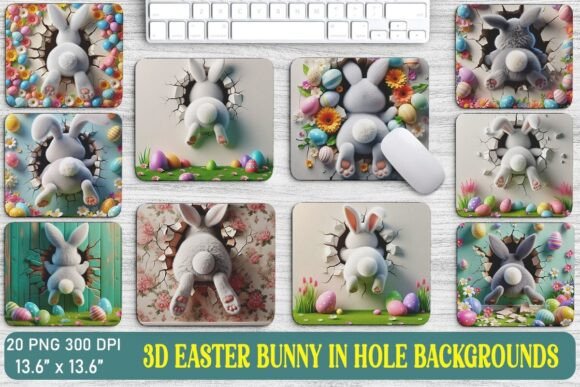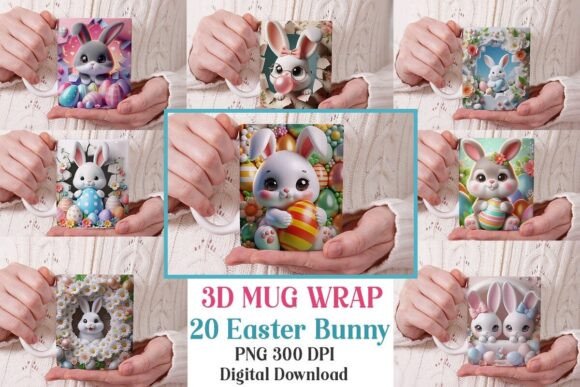
3D Cute Easter Bunny Mug Wrap PNG Bundle Review for Real Projects
Real-Life Embroidery Use and Performance
Custom Apparel: On a cotton sweatshirt, the bunny looks fantastic with satin stitch outlining and fill stitch for the body. The size is generous enough to let the details pop without overwhelming the garment.
Tote Bag Designs: This design adds a playful touch to a custom tote, especially if paired with a pastel color palette. Its placement on the front pocket or center panel depends on the hoop size you have available.
Baby Clothes & Nursery Decor: The softness of the bunny fits well into baby-themed embroidery projects. I could see it stitched onto onesies, bibs, or pillow covers as part of a cohesive set of design assets.
Holiday Gifts and Merchandise: For Easter, this is a no-brainer. Stitched on a tea towel or apron, it becomes a charming decorative element that customers will instantly recognize and appreciate.
Embroidered Patches: When converted into an applique design, the bunny holds up well. The high-resolution PNG files make it easier to trace outlines accurately for patch creation.
Where Caution Is Advised
- Small Hoop Sizes: At 9 x 4 inches, the design may require splitting for smaller hoops, which can affect continuity and visual impact.
- Textured Fabrics: If using on denim or flannel, the 3D effect might flatten due to fabric texture, so consider adjusting stitch density or using a stabilizer.
- Stretchy or Thin Fabric: Stretchy materials like spandex or lightweight knits can distort the bunny’s shape unless properly stabilized.
- Dark Backgrounds: The default thread colors (often pastels) won’t show up as well on darker fabrics. You’ll need to test thread contrasts carefully before production runs.
- Curved Surfaces: Placing the bunny on a cap or curved surface could lead to misalignment. Always use a mockup tool to visualize how it will fit.
- Frequent Washing: Because the design includes dense areas, especially around the ears and face, frequent washing may cause puckering or fraying over time if not backed properly.
Visual Appeal and Customer Reaction
In terms of stitching clarity, the bunny maintains good definition across most surfaces, particularly on mid-weight cotton blends. However, if you’re planning to use it on multiple handmade products, be sure to review each application for detail retention. The professionalism of your finished product hinges on how clean and crisp the final embroidery appears. This design also helps build brand consistency for craft businesses. If your shop focuses on seasonal or whimsical motifs, adding this to your collection of digital embroidery files gives your listings a unified look. As an Etsy seller or small shop owner, this can improve buyer engagement and increase perceived value.Design Notes for Embroidery Success
- Test on Scrap Fabric: Always run a sample stitch to check how the design behaves with your machine, thread, and stabilizer.
- Review Thread Color Contrast: Especially important for dark backgrounds. Don’t assume the provided thread colors will work for every fabric type.
- Check Stitch Density: Dense stitch areas can lead to puckering. Adjust as necessary depending on the fabric you're working with.
- Confirm Hoop Size: Though the design is approximately 9 x 4 inches, your machine’s maximum hoop size will determine whether it needs splitting or scaling.
- Inspect Small Details: The bunny’s facial features and paws are delicate. These elements may need reinforcement if placed on stretchy or thin materials.
- Use Proper Stabilizer: A tear-away or cut-away stabilizer can help maintain the shape and prevent distortion, especially on stretchy or textured surfaces.
- Consider Licensing: Since this is a commercial-ready bundle, double-check the license terms before selling finished items or including it in digital product bundles.
- Try Black and White Mockups: This helps assess how the design would look with different thread colors or on monochrome fabric options.
- Compare Light and Dark Fabrics: Test the design on both to understand visibility and contrast differences.